On this page
Last Updated on September 29, 2026 by Muhammad Toqeer
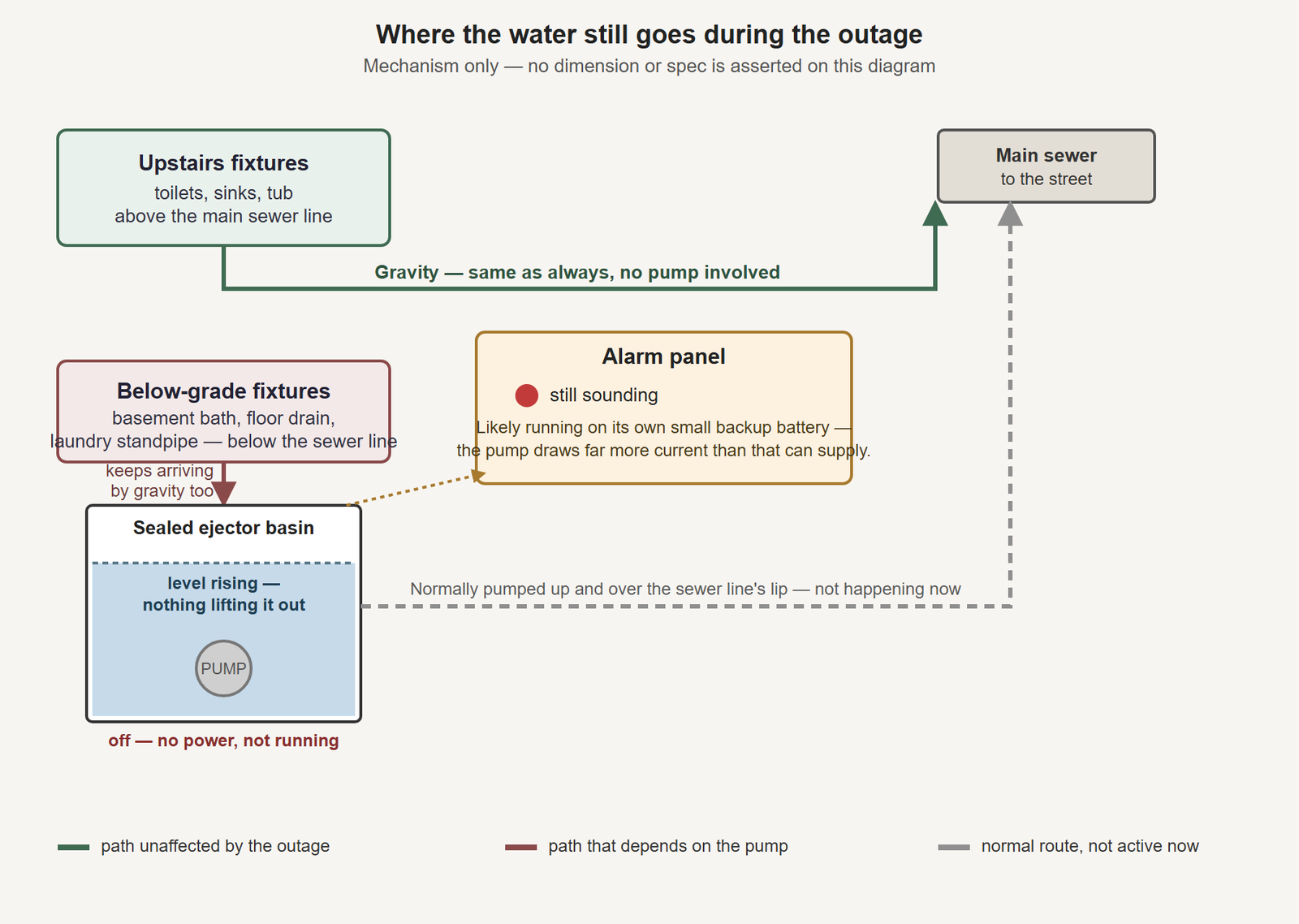
Stop sending water down the drain. Whatever the panel turns out to be telling you, anything that goes into that pit stays there until the pump runs, and the alarm exists to give you the time you are now using.
Then read the panel properly — because the alarm is a separate machine from the pump. Its own float, its own cord, its own plug. It can sound with a perfectly normal pit, and it can be in alarm while making no noise at all.
First, the part that is actually urgent
An ejector pit is the bottom of your basement drainage. A high-water alarm means the level has reached a point it should never reach, and there is not much room left above it.
So: no toilet, no shower, no laundry that drains into the pit until you know what is going on. The rest of the house on upper floors generally reaches the sewer by gravity and never enters the pit at all.
This buys you the time to diagnose rather than bail. That is the whole reason the alarm is there.
What the panel is showing
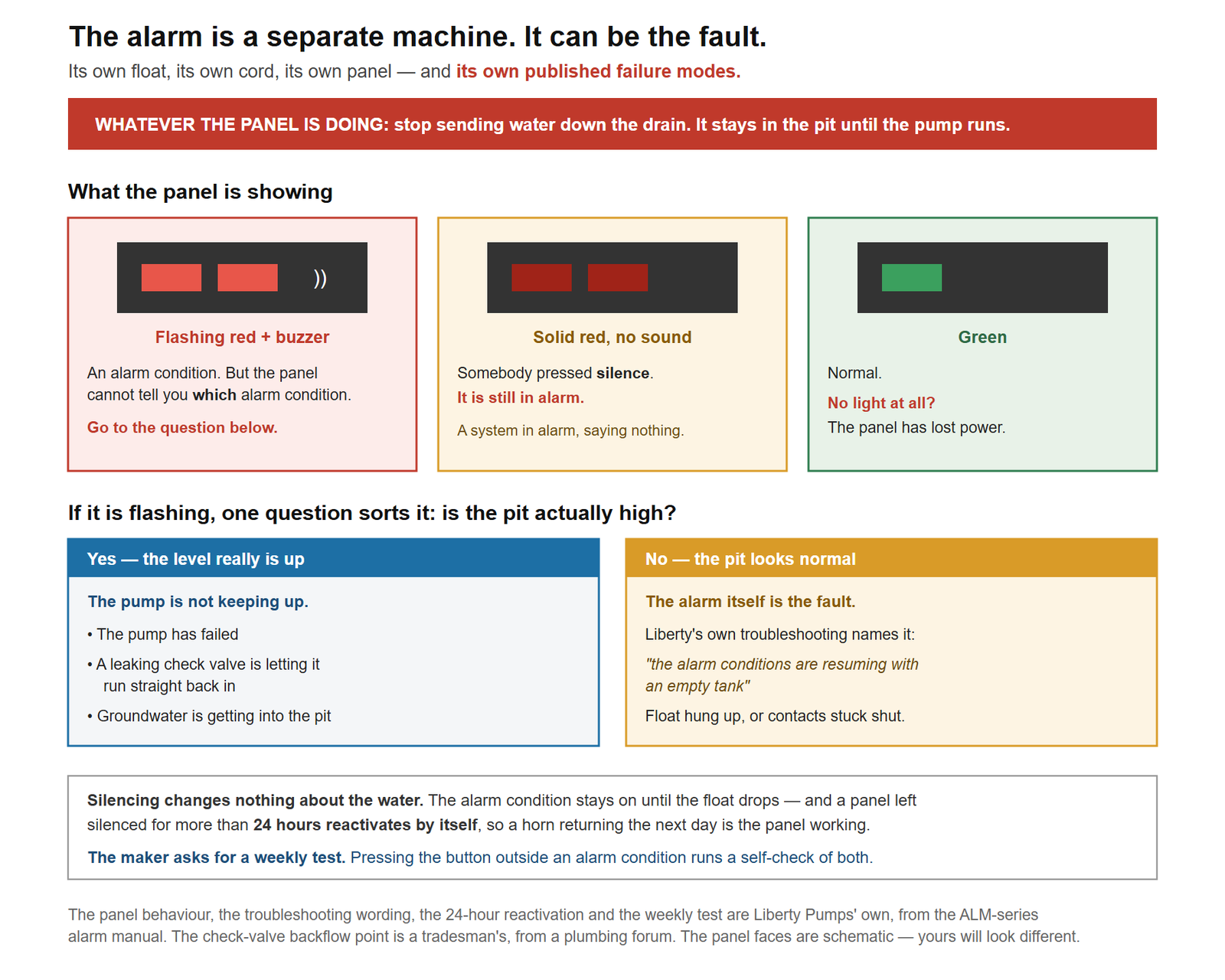
Flashing red with the buzzer going is an alarm condition — and that is all it tells you. The panel is wired to a float; the float has closed; the panel has done its job. It has no idea whether the pit is full or its own float is stuck.
Solid red with no sound is the one to know about, and it is covered below.
Green is normal. No light at all means the panel has lost power — which on a plugged-in alarm usually means the outlet or the breaker, and it is worth checking because the pump may well be on the same circuit.
If it is flashing: is the pit actually high?
One question, and it sorts the whole thing.
You can often answer it without opening anything — an alarm sounding while a fixture is draining slowly, or gurgling, or backing up, is a pit that is genuinely full. A pit that has just been through a normal cycle and sounds fine is not.
If the level really is up
The pump is not keeping up, and that is a pump problem rather than an alarm problem. Start with whether it is running at all — which you can test at the outlet without opening the pit.
If it is running and the level is still high, water is arriving faster than it leaves. A leaking check valve is the classic reason: as a tradesman on Terry Love’s forum put it, “the check valve could be leaking by letting the sewage flow back into the tank.” So can groundwater getting into the pit, which shows up after heavy rain and sounds like trickling in a pit with nothing running.
A test for that, from the same thread: shut the water supply to the house off and watch the pit. If it keeps filling with the supply off, the water is not coming from your fixtures — it is coming back through the valve or in through the ground.
Working out which of those it is has its own article — the shape of the refill tells you whether it is the check valve or groundwater.
(That thread, for what it is worth, was never resolved — the owner never came back to say which it was.)
If the pit looks normal
Then the alarm is the fault, and the manufacturer names this outright. Liberty’s own troubleshooting table lists the problem as:
“While using the alarm float switch, the alarm conditions are resuming with an empty tank”
with two causes. The first:
“Check to see if the float switch is hung up on something”
— its own float, hung on the discharge pipe or the pit wall, held up with nothing under it. And the second, on an older installation:
“If the float switch is old, the contacts could be stuck shut”
— for which the manufacturer’s solution is simply “Replace the float switch.”
Either way the fix is in the pit, which is where this stops being your job.
The silent alarm
This is the state nobody writes about and the one that actually hurts.
Liberty’s table again, and read the problem carefully:
“The alarm float switch is activated, but the red LEDs on the enclosure are solid and the buzzer is not annunciating”
The cause is that the silence pushbutton has been pressed.
So: solid red light, no noise, and the system is still in a live alarm condition. Somebody hit silence — last month, last year — and the panel has been sitting there in alarm ever since, telling anyone who walks past that everything is fine.
If your panel is showing a steady red light and no sound, you do not have a working alarm. You have a silenced one.
What silencing actually does
Nothing to the water, and the manual is explicit:
“The alarm condition will stay on until the alarm float switch is deactivated.”
“If the silence pushbutton is pressed during an alarm condition, then the top cover of the enclosure will turn solid red and the buzzer will silence. The silence condition will reset when the alarm float switch deactivates.”
Silence is for your ears while you work, not a fix. The condition clears when the level drops, and not before.
And there is a backstop worth knowing, because it gets mistaken for a second fault:
“If the alarm is in silence mode for longer than 24 hours, the alarm will reactivate.”
A horn that comes back the next day is the panel working exactly as designed — it is telling you the problem never went away.
If you do not have an alarm at all
Plenty of houses do not. Look at the outlet: two cords is a pump and its float. A third cord means you have an alarm.
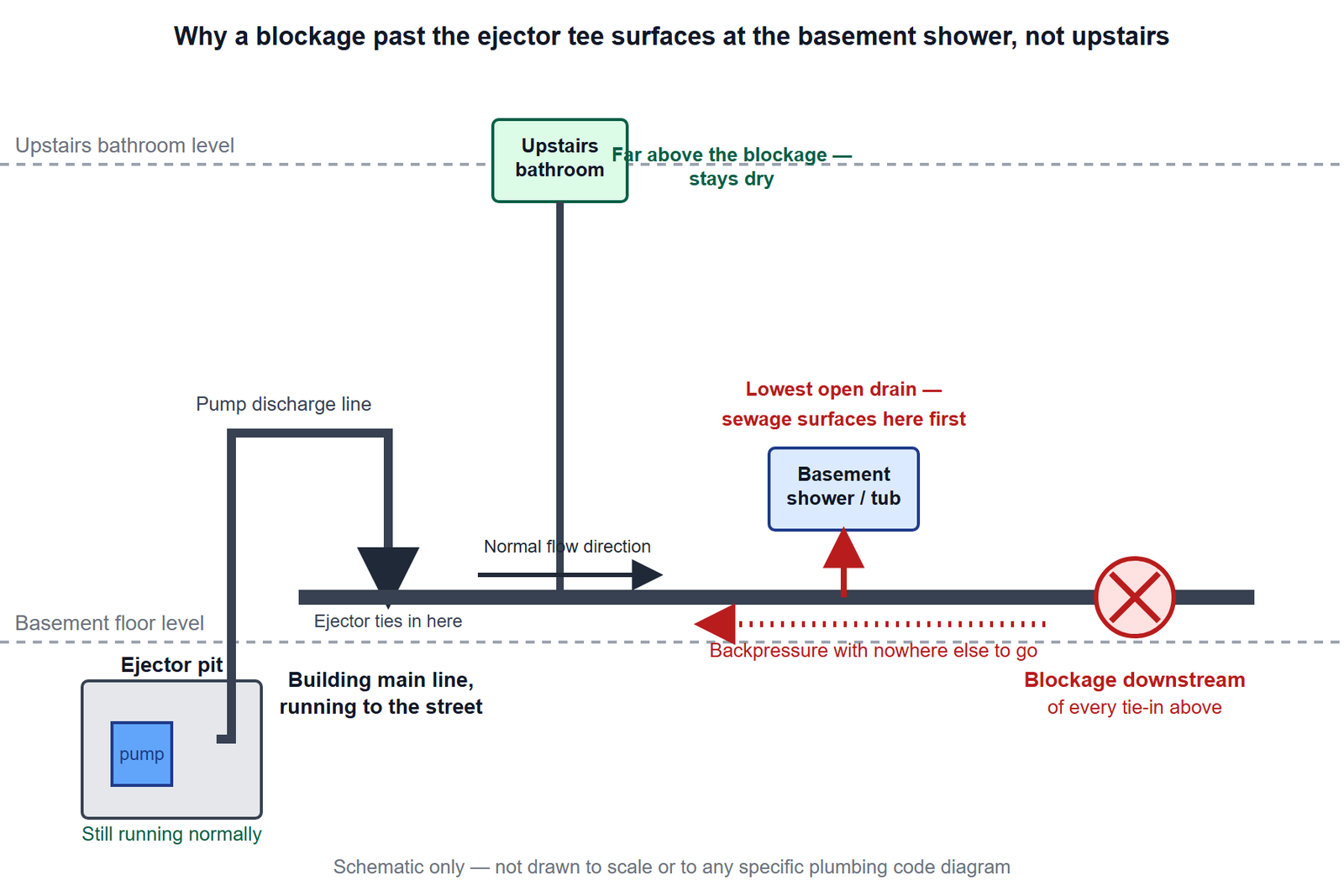
If there is no third cord, the first you will know about a failure is when it reaches a fixture — which is how the homeowner in the other thread found out, with water coming up in the basement bathroom mid-shower.
A plumber in that discussion put the case for fitting one about as well as it can be put:
“an alarm float so you know you have a problem before you actually have a problem”
And if you do have one, the manufacturer asks you to test it weekly. Pressing the button when there is no alarm condition runs a self-check: the LEDs should flash and the buzzer should sound. It takes two seconds and it is the difference between an alarm and an ornament.
When this needs a pro
Anything inside the pit. Freeing a hung-up alarm float or replacing a float switch both mean opening a gas-sealed pit, and that is the one genuinely dangerous part of this system.
An alarm sounding with a high pit and a pump that will not run. That is now an urgent call, not a weekend job.
A pit that is filling with the house water shut off. Either the check valve or groundwater, and both are below the lid.
A panel with no power where resetting the breaker does not fix it.
What you can do yourself: stop using the drains, read the panel, check the breaker and the outlet, look for a third cord, and run the test button. All of it from outside the pit.
And if the pump is replaced as a result, the model letter decides whether the next one can be tested from outside the pit — worth settling before the order goes in.
FAQ
Why is my ejector pump alarm going off?
Either the pit really is high — the pump has failed, a check valve is letting sewage back in, or groundwater is entering — or the alarm’s own float is hung up or has stuck contacts. Stop sending water down the drain first, then work out which.
Can I just silence the alarm?
You can, and it changes nothing about the water. The alarm condition stays on until the float drops, and a panel left silenced for more than 24 hours reactivates by itself.
My alarm light is solid red but there is no sound. Is that normal?
No. That means the panel is in an alarm condition and the silence button has been pressed. A steady red light with no noise is a silenced alarm, not a working one.
Can a high water alarm go off when the pit is not full?
Yes, and the manufacturer lists it: the alarm float can hang up on the discharge pipe or the pit wall, and an old float’s contacts can stick shut. Both need the pit opened.
How do I know if I even have an alarm?
Count the cords at the outlet. Two are the pump and its float switch. A third cord is an alarm. Many houses have never had one fitted.
How often should I test an ejector alarm?
Weekly, per the manufacturer. With no alarm condition present, pressing the test button should flash the lights and sound the buzzer.