On this page
Last Updated on October 25, 2026 by Muhammad Toqeer
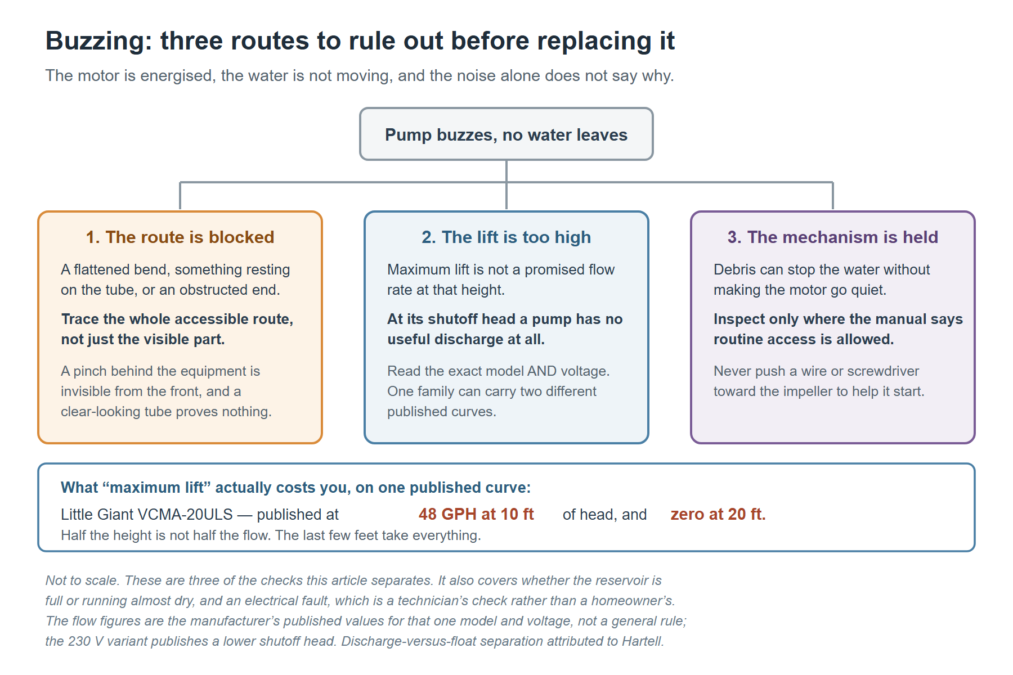
A condensate pump that buzzes without removing water may have a blocked discharge, an obstructed pumping mechanism or an electrical fault. Buzzing alone cannot distinguish them. Turn off the equipment feeding it if water is backing up, then isolate the pump before inspection. Do not let it sit energized while you investigate.
This article covers a small HVAC reservoir pump. A remote mini-split pump with a separate detector needs its own service procedure.
Is the tank full, or is the pump running almost dry?
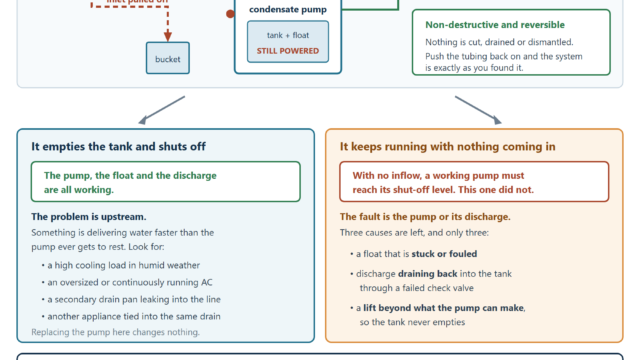
That distinction changes the diagnosis. A high reservoir means the water has not been removed. A low reservoir with a persistent noise points toward a different problem, such as a control that continues to call for pumping.
One-minute check: before dismantling anything, note the level through an accessible inlet or visible reservoir, without touching the operating pump. Also verify that the noise comes from this pump rather than the adjacent furnace or air handler. Shut it down if it is not moving water.
Do not reach through an inlet to lift a float while power is connected. Do not assume an HVAC thermostat switch disconnects the separate pump supply.
Can water get through the discharge tubing?
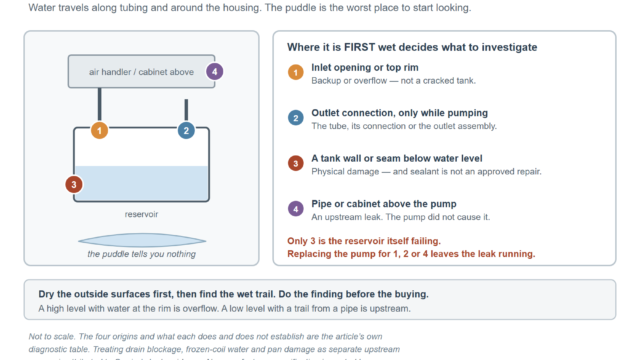
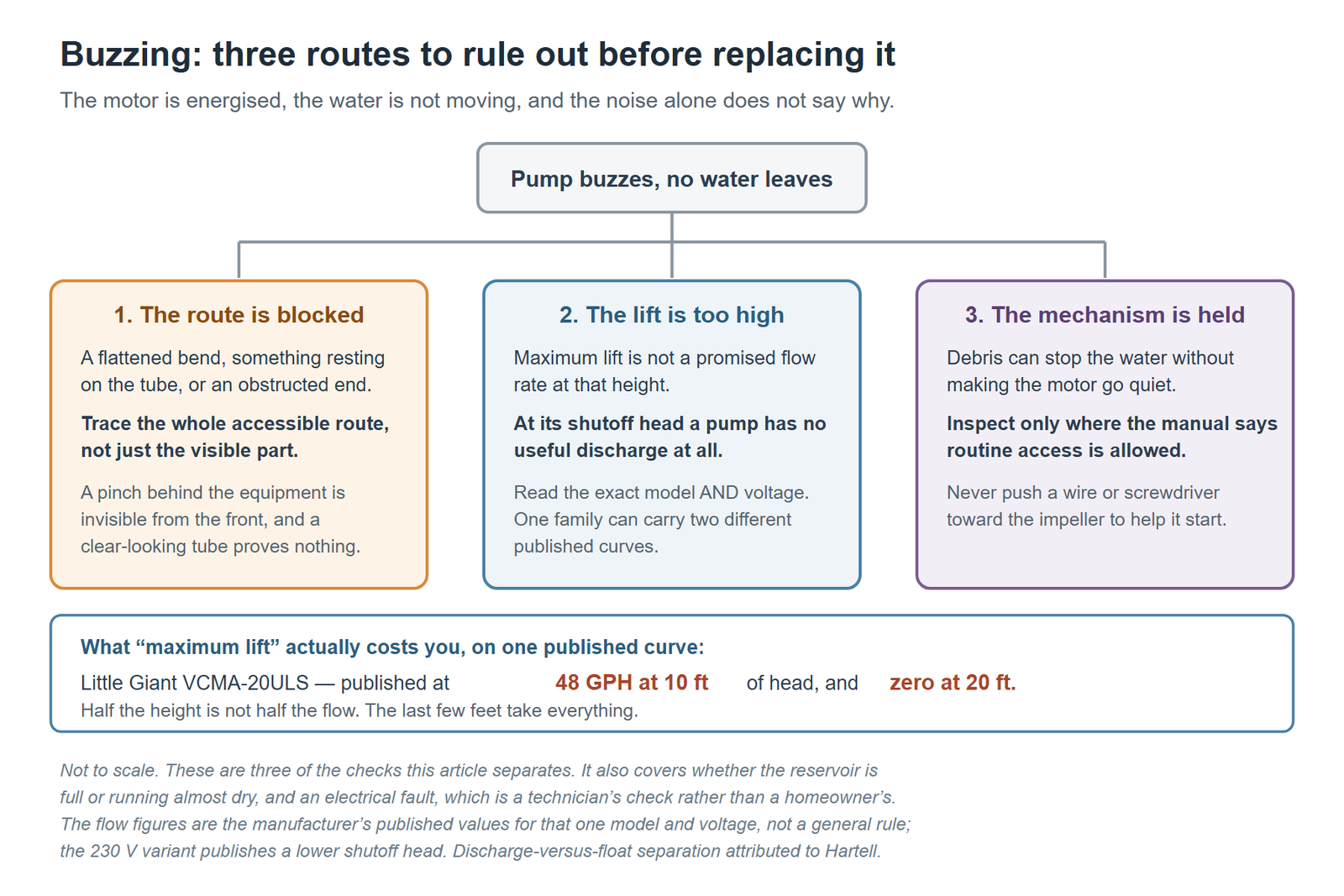
Trace the small outlet tube from the pump to its destination. A pinch behind equipment can be invisible from the front. The useful inspection is the whole accessible route, including bends and the final outlet.
One-minute check: with power isolated, look for a flattened bend, an object resting on the tube, a visibly obstructed end or a recently altered route. Photograph the problem before changing it. Do not tug on tubing connected to a brittle outlet fitting.
An obvious kink can explain the symptom. A clear-looking tube does not prove the passage is clear throughout. [Hartell’s troubleshooting advice][1] specifically separates discharge restrictions from float-control faults.
A technician can compare performance with the installed line against a safely contained, manufacturer-approved short discharge test. If output returns with the route removed, that implicates the route. It does not certify the original check valve or prove the pump meets its full curve.
For routing questions, see where condensate discharge can go.
Is the required lift beyond the pump’s useful output?
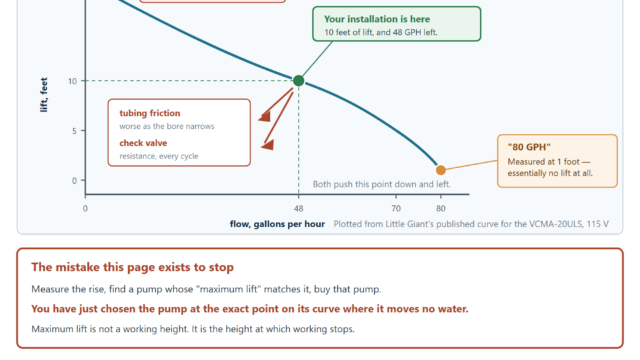
Maximum lift is not a promised flow rate at that height. A pump at its shutoff head has no useful discharge.
The Little Giant VCMA-20ULS, for example, is listed at 48 GPH at 10 feet of head and zero at 20 feet. Its model family also includes a 230-volt variant with a lower published shutoff head, so the family name alone is not enough to select a curve.[2]
One-minute check: read the exact model and voltage, then estimate the vertical rise to the high point without climbing or opening equipment. Compare that with the correct manufacturer data. A proper sizing check also includes the tubing route and restrictions; do not use a fixed “horizontal feet equal vertical feet” rule.
The explanation of how far a condensate pump can push water helps separate those measurements. A new blockage is more plausible than a suddenly changed height if the installation has worked unchanged, but both remain checks rather than assumptions.
What if the valve or pumping inlet is obstructed?
Debris can stop water without making the motor silent. Inspection must follow the installed pump’s maintenance instructions: some parts can be removed for cleaning, while the motor assembly is not a homeowner repair item.
One-minute check: after safe isolation, look for visible debris at accessible service points described by the manual. If the manual requires removal beyond routine maintenance, stop there. Never push a wire or screwdriver toward the impeller to “help it start.”
Order replacement outlet parts by the pump’s exact identification. Current manufacturer parts listings distinguish production date codes; a check valve pictured online is not necessarily the one fitted to your unit. This is especially relevant after a valve replacement that did not fix the original fault.
When is replacement justified?
An unobstructed external route does not by itself prove motor failure. A qualified technician may still need to establish correct supply and determine whether the mechanism is stalled or damaged. Repeated humming, overheating or a protective trip is a reason to stop testing, not to leave the pump running longer.
If the pump itself has failed, or it cannot provide the required output for the route, compare replacement capacity and overflow protection together.
If the route is clear and the lift is within the published curve, compare condensate pumps by the drain route they have to serve rather than by the largest printed number.
When this needs a pro
Call for service if water has reached electrical parts, the pump is hardwired, a breaker trips or the discharge is concealed. Also have the overflow shutdown checked after repair. A pump moving water during one test does not establish that the connected HVAC equipment will stop if drainage fails again.
[1]: https://www.hartell.com/en-us/news/residential-ac-unit-condensate-pump-troubleshooting/ [2]: https://www.littlegiant.com/products/condensate-removal-pumps/condensate-pumps/vcma–vcmx-series/vcma-20/